
How it Works: Breaking the 2026 IBDP Math Exams
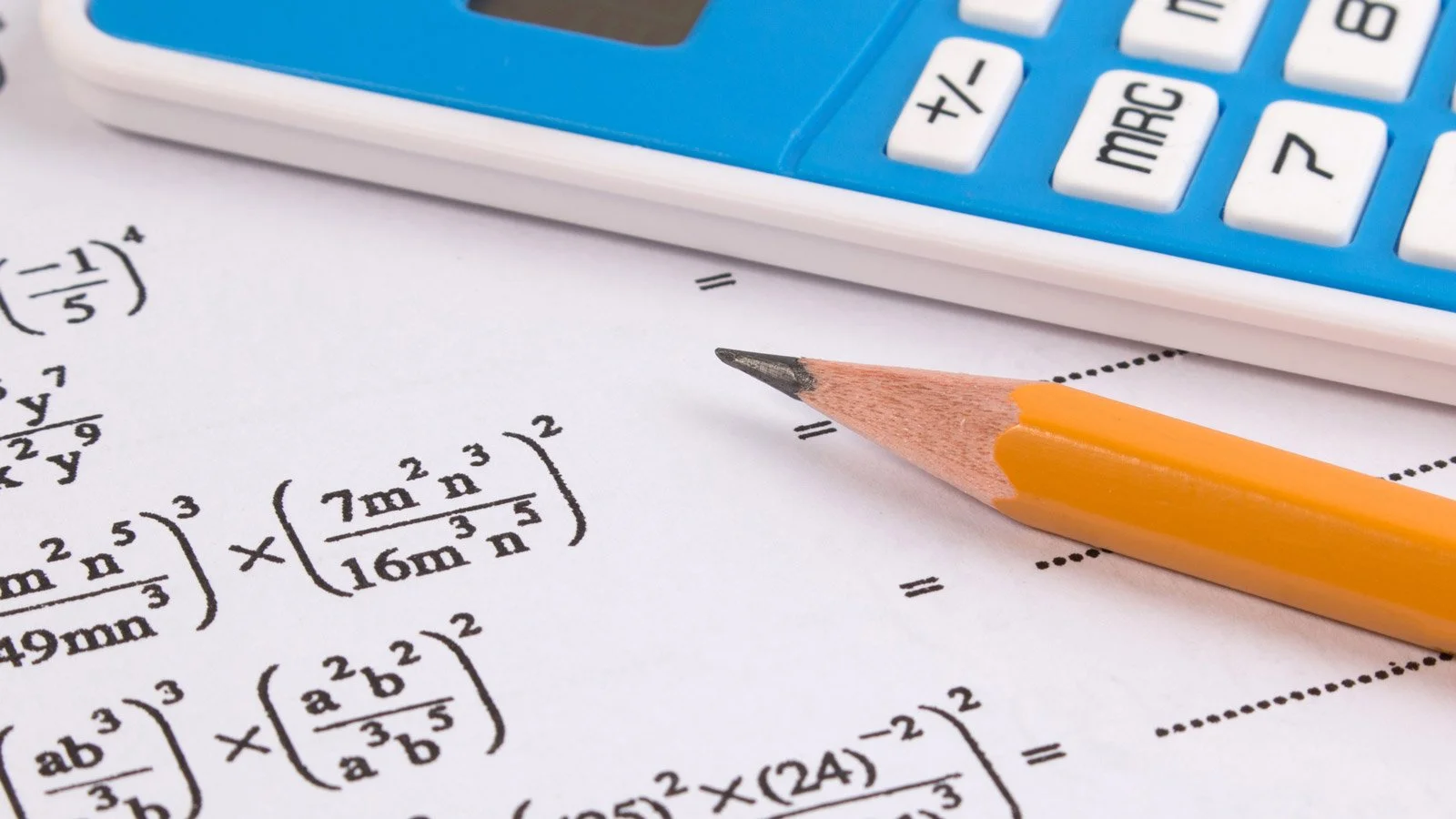
Math is an interesting subject. Love it or hate it, it finds its way into many aspects of our lives. The IB, recognizing this too, has made it a mandatory component to graduating from their Diploma Program. And so, IBDP students year after year find themselves scrambling to prepare for their math exams after 2 full years spent otherwise engaged. So with just under a month left to go with the May 2026 math exams ready to go, the question remains: what can we do to make sure our test goes well? I personally find that taking a moment to understand why the test is structured the way that it is helps me improve my test scores
Understanding the format
The IB math finals of the May 2026 session, for both the Analysis and Approaches and Applications and Interpretation Courses, will be split into 3 Papers. Of those 3, 2 will be conducted in the span of Thursday to Friday on week 3. The third, exclusive to the HL students, will be conducted the following Wednesday. Each test follows slightly different rules, and is designed to test different core math skills.
Paper 1: Non-calculator questions
The lack of a calculator means that you will have to make calculations by hand. Practicing your mental math is always useful regardless, but ironically it’s less useful for this particular exam than you might expect. Given that you will be used to graphing using your graphic display calculator, it’s more important that you get used to sketching graphs by hand. In order to quickly get the hang of sketching graphs, you should try to be able to find 4 things:
Intercepts
You can get the x intercept(s) by entering y=0 into your equation and solving for x. Vice versa, you can get the y intercept(s) of a graph by entering x=0 into your equation and solving for y. Once you have all your intercepts, mark them down on your axes.
Maxima/Minima
Find the local maxima and minima of the graph. If you have the equation, you can use differentiation to find these. Otherwise, if you have a table of values, it may be possible to find these based on the available values.
Points of Inflection
Not applicable to every graph, but useful to know when they’re available. If you found the Maxima/Minima by differentiation, you can solve for points of inflection by differentiating a second time.
Asymptotes
Also not applicable to every graph. Used to denote values to which a graph tends in the limit, without ever truly being equal to.
Paper 2: Calculator questions
With calculators being allowed, this paper is less about visualizing graphs and more about being able to process large amounts of information quickly and methodically. This section will focus more on your conceptual understanding of the various topics you have studied over the last two years. You will likely encounter more tables here, that you will either need to transcribe into the table tools of your GDC, or methodically analyze them before performing any further calculations. In an ironic twist, I find practicing mental math fundamentals is more useful for this paper than it is for paper 1. While initially this thought process is unintuitive, it makes more sense as you consider it: there is a limit to how quickly you can input information into a calculator, and the time taken for each keystroke adds up. If you can minimize keystrokes by performing intermediate steps mentally, you can save significant amounts of time. Your GDC may have the capacity to input a full table to process automatically, but if you focus on extracting the values that are immediately relevant to your needs, you can spare yourself the time taken to copy it down. In addition, you may notice an influx of trigonometry questions on this paper. If you struggle with geometry/trigonometry, I’d recommend focusing on calculator papers in practice to compensate.
Paper 3: HL Only
Paper 3 is unique compared to the other two papers, as it tends to lean more into the core philosophy of the respective courses. The AA paper tends to focus more on proofing, whereas the AI paper tends to focus more on mathematical modelling and statistics. Both papers are structured in the form of two multi-part questions with somewhere between 5 and 10 parts each, with each part building off the previous one. While this may mean that a question early on may carry over, the individual parts tend to be structured to avoid this. You may find that mistakes made in subparts of a given part of a question may carry over into successive subparts though, so it’s better to be careful if possible.
Analysis and Approaches, HL
Paper 3 for AAHL will generally involve some combination of calculus, geometry and trigonometry fundamentals. Doing well on this paper generally involves understanding how to solve limits, in addition to knowing your trigonometric functions, their derivatives, as well as circle theorems. In order to do well on this paper I’d recommend brushing up on all of these topics.
Applications and Interpretation, HL
Paper 3 for AIHL tends to contain one statistics and one modelling question. Understanding parametric equations and equilibria as well as brushing up on your various statistical testing methods will be important to doing well on this paper.
Conclusion
The IBDP expects a combination of a firm conceptual understanding as well as a degree of creativity and versatility to solve the variety of problems they ask of you, but staying focused and cognizant of their assessment goals can help you stay grounded and put you in a better headspace to master the course.
