
How to Do Well in Cambridge Maths Exams
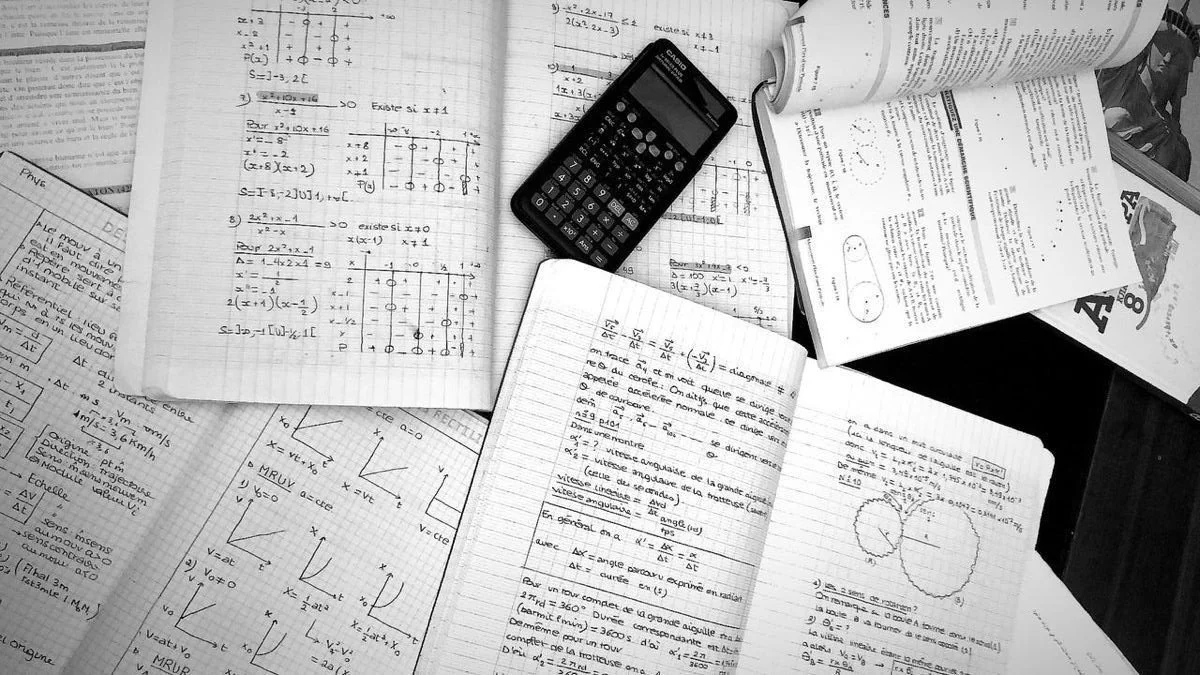
Success in IGCSE exams is not linear – it takes trial and error. I have mock exams to thank for pushing me to do better in my exams. Here is how I went from just a passing grade to acing Maths.
Cambridge Maths, a breakdown:
Firstly, it is important to understand which curriculum you are doing.
Maths Core (0580), Papers 1 and 3: The highest grade available is a C. A common misconception is that achieving a C requires only around 50–60% of the marks. In reality, because the paper is designed for lower-grade attainment, students often need a very high percentage, of around 80–90% or more, to secure the maximum grade of C.
Extended Maths (0580), Papers 2 and 4: The most common pathway, covering both Core and Extended content. Students can achieve the full range of grades, including the highest grades. Topics include algebra, geometry, trigonometry, statistics, and more advanced problem-solving skills.
Additional Mathematics (0606): A separate qualification taken alongside Extended Maths. It introduces more advanced mathematical concepts, including differentiation and integration, logarithmic and exponential functions, advanced trigonometry, coordinate geometry, and complex algebraic techniques. It serves as strong preparation for A-Level Mathematics, IBDP HL Mathematics, or equivalent pre-university courses.
In all cases, you should be completing past papers after past papers – here is a guide on how to prepare for the upcoming exams, whether you are in your first or final year:
The single most effective way to improve in IGCSE Maths is to use past papers. If you are just days away from taking the exam, then you need to start practicing how to complete the question problems as opposed to the problems in the textbook, as exam questions demand a whole new level of analysis. Here is how you should approach revision:
Work backwards in completing past papers: for each year, there are two sessions: May and November. And in each session, there are three distinct variants (corresponding to different time zones). As someone who sat the Extended Maths exam in 2024, I had completed past papers as far back as 2014.
Understand that earlier past papers may include questions related to topics you do not need to know, such as vectors and scalars. If you do not need to know a topic, don’t confuse yourself with understanding how to calculate it. Particularly if you’re at a stage where time is not your friend.
Sit under exam conditions, and use the mark schemes: for each paper you are revising for, time yourself and stick to it. If you find you are unable to finish in the allotted time, then make use of some exam techniques:
i. If you are confused with a question, leave it and come back to it later.
ii. If you do not arrive at a desired answer (e.g it is negative when it shouldn’t be), at the very least leave your working out, as there may be a mark awarded for showing your thought process.
iii. If you can identify a common topic that you take a while to calculate (e.g., quadratics, differentiation, etc), then maybe complete some work problems in this area. That way, on the day of the exam, if you see this topic, you know exactly what to do.
Make use of your subject teachers – they are there to help you. If you complete a past paper, highlight the question you got wrong and still do not understand how the mark scheme arrived at its given answer, ask your teacher. For some of you, I know this can seem daunting… It took me some time to wrap my head around the fact that teachers are here to help us; however, showing that you took the initiative to complete the past paper in your own time reads well to teachers. They will thus be more inclined to help you.
Memorise the formulas! Create flashcards, study quizlets, make songs… whatever you need to do. Below are the topics that require memorising:
Core and Extended
Area and circumference of circles
Area and volume of common 2D and 3D shapes
Pythagoras' theorem
Trigonometric ratios (sin, cos, tan)
Compound interest and depreciation formulas
Speed, distance, and time relationships
Probability formulas
Addmaths
Quadratic Formula
Law of Algorithms
Factor theorem and remainder theorem
Sequences & Series: arithmetic sequence, geometric sequence, and their sums
Trigonometry: sine rule, cosine rule, area of a triangle, trigonometric identities
Differentiation Rules and Integration Rules
Final note
Having completed countless past papers myself, the biggest lesson I learned is that success in IGCSE Mathematics comes from familiarity. Eventually, the questions stop feeling unfamiliar because you've seen similar problems so many times before.
Trust your preparation, show every step of your work, and don't let one difficult question shake your confidence during the exam.
At Kokusaba, we offer tutoring support, with experienced tutors tailored specifically to IGCSE subjects, including Maths, helping students refine their analysis and approach exams with confidence. Contact us to learn more!
