
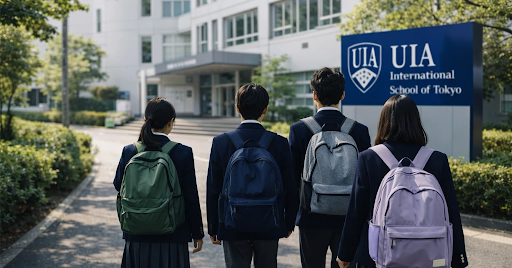
Living in Tokyo is overwhelming, and picking the right International School is even more overwhelming. You can read so many brochures and websites, but the information you really need rarely comes to you.
As a former student, I know exactly what happens behind the scenes, from pressures inside the classroom, the full length of support I could have received, extracurricular activities, to the steps of applying for University.
In this post, I will be answering the Top 10 questions parents frequently ask about international schools in Tokyo. Here is the truth from someone who lived it.
1. What are the benefits of studying in an International school in Tokyo?
One of the benefits that resonates with me is that students meet people from many countries, which helps develop communication skills, cultural understanding, and global awareness.
International schools also often encourage independent thinking, discussion, and creativity compared to more exam-focused systems. I was always around an international community, which created more diverse and inclusive conversations in the classroom. This helped me understand multiple perspectives and make friends from all corners of the world.
2. Did the school offer boarding or a homestay, or did you have to live with your parents nearby?
Most international schools in Tokyo do not offer boarding, so many students live with their parents nearby. Some students from overseas may arrange homestays or private apartments, but this depends on the school and family situation. In my situation, my family lived an hour and a half away from school, so although the commute was exhausting, it was manageable, and I always utilized my time on the train to study or review school content.
3. How did you handle the high tuition and living costs? Were there opportunities for part-time work or scholarships?
International schools can be expensive, so many families rely on savings, company support, or scholarships. Some schools offer merit-based or financial aid scholarships. Older students, usually aged fifteen and above, may also work part-time depending on their visa status and schedule, although balancing schoolwork and work can be challenging.
4. How was the support for preparing/applying for University?
Most international schools provide strong university counseling support. Teachers and counselors help students choose universities, prepare personal statements, apply for scholarships, and study for exams such as the SAT, IELTS, or TOEFL. Many schools also hold university fairs and mock interview sessions.
During my final year of high school, we would tour schools, and many universities would come to our school during a college fair to tell us about themselves and answer questions that we may have about the University.
Our teachers were very supportive; they would read our essays with us, write us recommendation letters, and confirm what transcripts we needed. When I needed transcripts from my old school back at home, my high school went out of its way to call them multiple times throughout the year to make sure that I got my documents.
5. What kind of extracurricular activities did you participate in?
During my final two years, I was part of our school’s Model United Nations (MUN) and participated in competitions and events. There are also music clubs, student government, art clubs, volunteering, and cultural festivals. These activities help students build leadership, teamwork, and communication skills outside the classroom.
6. How was the environment of the classroom, and what was the learning style?
The classroom environment was usually interactive and discussion-based. Students were encouraged to ask questions, share opinions, and participate actively. Learning focused more on critical thinking, presentations, essays, and group projects rather than memorization alone. Although we mostly had to work by ourselves, we were always encouraged to work in groups or have study sessions together.
7. Does going to an International school improve your English?
Yes, studying in an English-speaking environment improves English significantly, especially speaking and listening skills. Since classes, assignments, and daily communication are mainly in English, students naturally grow more confident and fluent over time as they are exposed to the language on a daily basis.
8. Could you explain the type of exams you gave?
My school had the A-level program, including writing papers, answering multiple-choice questions, and performing experiments for our science classes. A-Level courses typically span two years, with students focusing on 3 to 4 subjects of their choice.
Grades range from A* to E. These grades correspond to UCAS points used for university admissions.
The types of exams depend on the curriculum. Some schools may also follow the International Baccalaureate (IB), while others use AP, or American-style systems. Exams often include essays, presentations, coursework, research papers, and written tests rather than simple multiple-choice questions.
9. How did you prepare for exams outside the classroom?
Preparation included reviewing notes, practicing past papers, joining study groups, attending tutoring sessions, and using online resources such as YouTube or educational websites. Time management and independent study were important skills. As I did A-levels in my high school, I would also go through my answers with my teachers, and they would always advise me on what would get me full marks on every answer.
10. Did you have any difficulties transitioning from a fully English environment to a bilingual environment?
Yes, transitioning to a bilingual environment can sometimes be difficult. Students may feel less confident using academic Japanese or switching between languages. However, over time, many students become more adaptable and develop stronger communication skills in both languages.
Conclusion
Although there may be challenges such as high costs or adapting to bilingual environments, many students gain important skills that prepare them for university and future careers. Overall, international schools offer a unique learning experience that can strongly influence both academic growth and personal development.
For more information and support for joining international schools in Tokyo, please visit our website Kokusaba Learning Partners!
