
The First Month of IB: What You Should Actually Focus On
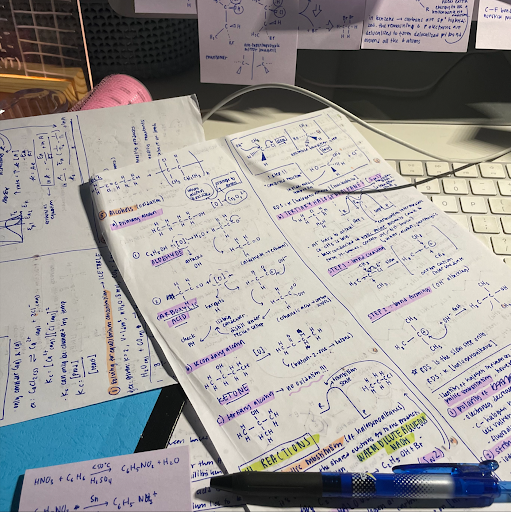
Starting the International Baccalaureate (IB) can feel overwhelming. After a long summer break, there are suddenly new subjects, unfamiliar assessment criteria, TOK, CAS, the Extended Essay, and an endless list of deadlines to keep track of. The good news is that: although it is a good idea to prepare early on, you don’t need to have everything figured out in the first month.
Having gone through the IB myself, I’d recommend using the first month to focus on understanding how the programme works, and building the habits and discipline that will help you later on.
1. Understand your subjects
Before actually worrying about getting a perfect score in the final exam, take some time to understand what each subject expects. A good practice is to look through your syllabus and get a good idea of what topics you will study and how it will be assessed. As an example, it is good to know which subjects will include an Internal Assessment (IA) or an Individual Oral (IO).
Your IB study method will also depend heavily on the subject. For instance, IB Math requires plenty of problem-solving practice, whereas IB Physics requires a strong understanding of concepts before moving on to problem-solving practice. In the end, there is no single study method that will work for every IB subject, or for everyone. The key is to find out what works best for you along the way.
2. Learn how IB grades you
One of the best practices to adopt early on is to become familiar with the assessment criteria and the mark schemes. Understanding what examiners actually look for when grading your assessments can completely change the way you study, and help you achieve higher grades.
This is particularly important for subjects like TOK. Instead of simply searching for sample essays, you should take the time to understand the TOK assessment criteria (TOK 評価基準 コツ), as well as what makes an effective argument in a TOK essay. This is because, although TOK prompts change every year, they are always assessed the same way.
3. Find your weaknesses early
If you feel like you can’t keep up with your international school classes, don’t panic. Ask yourself whether the problem lies in the workload being too heavy, your time management, or even your study method.
Our tutoring services at Kokusaba can help you navigate the IB, so don’t hesitate to consult our well experienced tutors! We offer IB prep tutoring (IB 対策 塾), as well as support for other international school curricula, to help students build confidence and stay on top of their studies.
4. Get organized before things get busy
From a former IB student, I found that keeping track of test dates, IA deadlines, CAS, TOK, the EE, and even university applications (インター生 大学受験) from the beginning can be a huge lifesaver. IB students eventually have to balance schoolwork with university applications, so developing a schedule early on can save you a lot of time and stress.
Most importantly, the goal of your first month isn’t to master the IB. Instead, your first month should be focused on building strong foundations and discipline, while developing a foolproof plan to help you nail the IB.
Whether you need help with your IB studies or university admissions, feel free to reach out to Kokusaba Tutoring!
