
What You Can Do Over Summer Break to Avoid Bedrotting
Summer’s here, and if you’re anything like me, you are likely incredibly burnt out from what has been a rigorous academic year. Although the easiest option might be to just lounge around and doomscroll all day, summer can also be a great opportunity to strengthen skills, train your intellect, build your CV, or strengthen your college application if you’re preparing for university.
The best breaks balance rest alongside growth. The summer months can feel daunting, particularly if you are preparing to enter an exam-intensive year (such as your second year of the IBDP or A-levels) and feel you can’t afford any breaks. But you don’t have to spend your entire summer studying to make it productive. Instead, why not focus on the things you can control?
Here are some simple but effective ways to make the most of your summer, without turning your break into another school term.
1. Pick up a book (outside an assigned reading list)
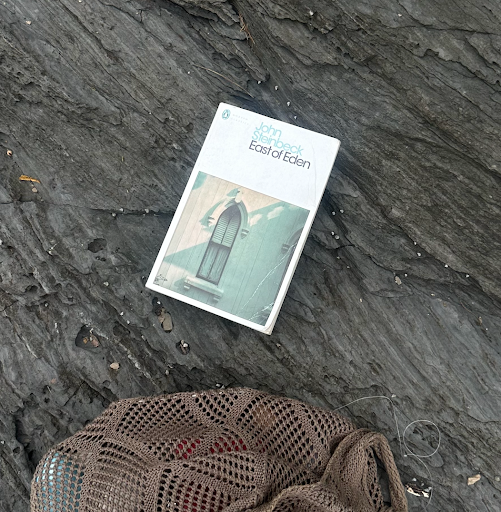
This is very important if you want to motivate yourself to be a better reader – we’ve all been there with not wanting to complete our assigned readings, so why not pick up a book that genuinely speaks to you? Personally, I am reading Steinbeck’s East of Eden this summer and finding it’s filled with lessons and ideas that feel surprisingly relevant to my life right now.
Reading outside your curriculum can also expose you to new perspectives, ideas, and styles of writing without the pressure of an assignment or exam. Who knows? You may even find yourself discovering an interest that shapes what you want to study at university.
2. Get on Coursera, complete a free online course
If you’re looking for a more structured way to spend your time, why not take an online course? Platforms like Coursera offer thousands of courses across subjects ranging from psychology, coding, economics, and law. If you have an idea of what you want to study in university, taking an additional course in the subject shows genuine interest – which reads well to admission officers.
One of the best parts is that, firstly, many online courses are free, and secondly, you can choose a course that aligns with your interests. I took a course on social justice during my second year of high school, and found it was particularly interesting as it connected to issues in society that I was already curious about. It served as an excellent way to explore an interest outside of my regular school curriculum, and in turn helped me develop a deeper understanding of a topic I cared about.
3. Look at applying to youth forums
Take it from a college student herself, youth forums are gold for broadening your horizons, networking with new people from different backgrounds, and engaging with topics beyond what you might encounter in the classroom. There are many youth forums open to students from 16 to their early twenties, covering a wide range of subjects, from climate change and social justice to international relations and global politics. Some are even free to attend virtually, or offer financial support for selected participants.
They’re also a great opportunity to challenge your own perspectives. Being surrounded by other young people who are passionate about both the same and different issues can introduce you to ideas and viewpoints you may not have considered before.
Not to mention, taking initiative on a global scale serves as a fantastic addition to your CV or university application. Going beyond simply saying you ‘participated’ in something, you can demonstrate that you actively sought out opportunities to engage with global issues, challenge your perspectives, and connect with people from different backgrounds.
4. Volunteer your time
If you find yourself with time this summer…volunteering is a great way to take some of that up. Particularly volunteering for a cause close to home. Though many of you may be initially motivated to volunteer to build your CV or extracurriculars, I guarantee you’ll walk away with something far more valuable: a greater appreciation for the people, opportunities, and communities around you.
Volunteering does not need to be traditional. You can volunteer your time for any organisation or cause that matters to you – whether that’s activism, your local library, an animal shelter, an arts and crafts studio, or even helping out at a community event. The key is to find something that interests you, and where you feel your time can make a difference even in the slightest.
Final word
With that being said, summer is also about relaxing and recuperating. Finding a balance between personal growth and your studies is particularly important for those of you approaching a final exam year. While universities certainly care about your grades and academic record, admission officers also want to understand who you are beyond your transcripts; in other words, your identity, and whether or not that fits in well with their campus community.
Don’t be so consumed in achieving a perfect score that you lose yourself in the process. Academic success is important, but so are your interests, relationships, experiences, and well-being. Learning how to balance these different aspects of your life is a skill in itself – and arguably one of the most valuable things you can take away from your summer.
Here at Kokusaba, we offer both subject-specific help and guidance with university applications.
